Stars and wishes
West Side StoryStars and wishes connect moments of love, grief, and loneliness, giving private hopes a shared image while exposing how little power they have over violence or the city’s vast indifference. The motif moves from Maria’s exhilaration to Baby-John’s plea for rescue and Anita’s abruptly broken hope, before widening into a vision of people across New York looking upward for lives that might change.
Stars as a Language of Feeling
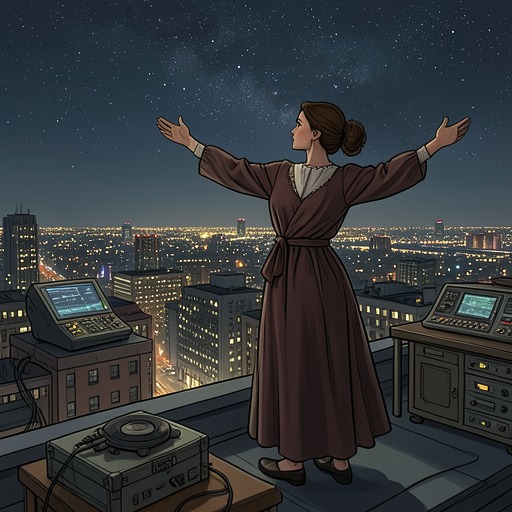
For Maria, the night sky becomes an expression of elation. She says she feels so wonderful and beautiful that she could fly, imagines running from one rooftop to another, and sees stars everywhere—along with four or five moons. Her declaration that she loves the most incredible boy gives this extravagant vision its emotional center: the stars register the scale of her happiness, not a separate supernatural occurrence. In her moment of joy, the ordinary sky seems to multiply with what she feels.
The same image carries a different force for Baby-John. Sitting inside the dark trailer of a wrecked truck in a riverside scrapyard, knees drawn up, he watches a star through a crack in the metal. He waits for a bright, meteor-like signal that will announce the arrival of the superheroes he has called on to save him. The narrow opening frames the star as a distant point of rescue, while his stillness in the wreckage makes clear how alone he is.
Wishes Beside Violence and Loss
Baby-John’s appeal follows the deaths of two people he regards in contradictory ways. He mourns Riff, whom he admires, and also recognizes the courage of Bernardo, whom he hates but respects. Tony Wyzek did not act like a coward in the knife fight, Baby-John thinks, yet he holds Tony responsible for the deaths. Looking to the star for help, the fourteen-year-old also reckons grimly that if becoming a tough guy means dying at about eighteen, he may have only four or five years left—and could spend two or three of them in reform school. The childish hope of a superhero’s arrival is thus set against his attempt to make sense of violent adult deaths and the future he imagines they predict for him.
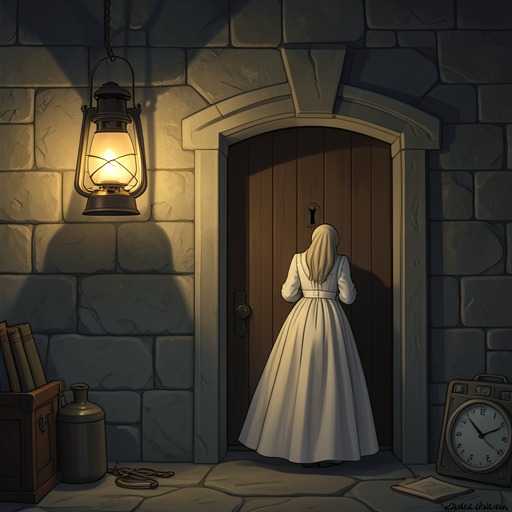
Anita’s wish also takes shape under the shadow of loss. She had worn the black orchid, waited eagerly, watched the first star, and made a great wish. Now, after Bernardo’s death, she has to find a black dress for his funeral. The change from looking upward in anticipation to preparing for mourning gives the star no power to prevent what has happened. Hope and grief occupy the same night, but the second has overtaken the first.
Private Longing and the Indifferent City
At the end, the image broadens beyond any one character. Some people in New York look toward the sky in loneliness, silently calling to the stars and moon and hoping that someone will hear them, that their small dreams will come true, and that they will find someone they can trust and be happy with. This gathering of unseen longings places Maria’s love, Baby-John’s appeal, and Anita’s wish within a much larger human pattern, without making their outcomes equivalent.
The closing contrast is deliberately stark: some wishes do come true, but that makes no difference to the city, which was built to outlast the lives of everyone who inhabits it. The city’s continuity does not answer the people who look upward, and individual fulfillment cannot by itself alter the conditions surrounding them. The motif ends not with a promise that hope will prevail, but with the persistence of wishing—and with the bleak possibility that, unless something changes, the same pattern will continue.